
Here’s what you need to know:
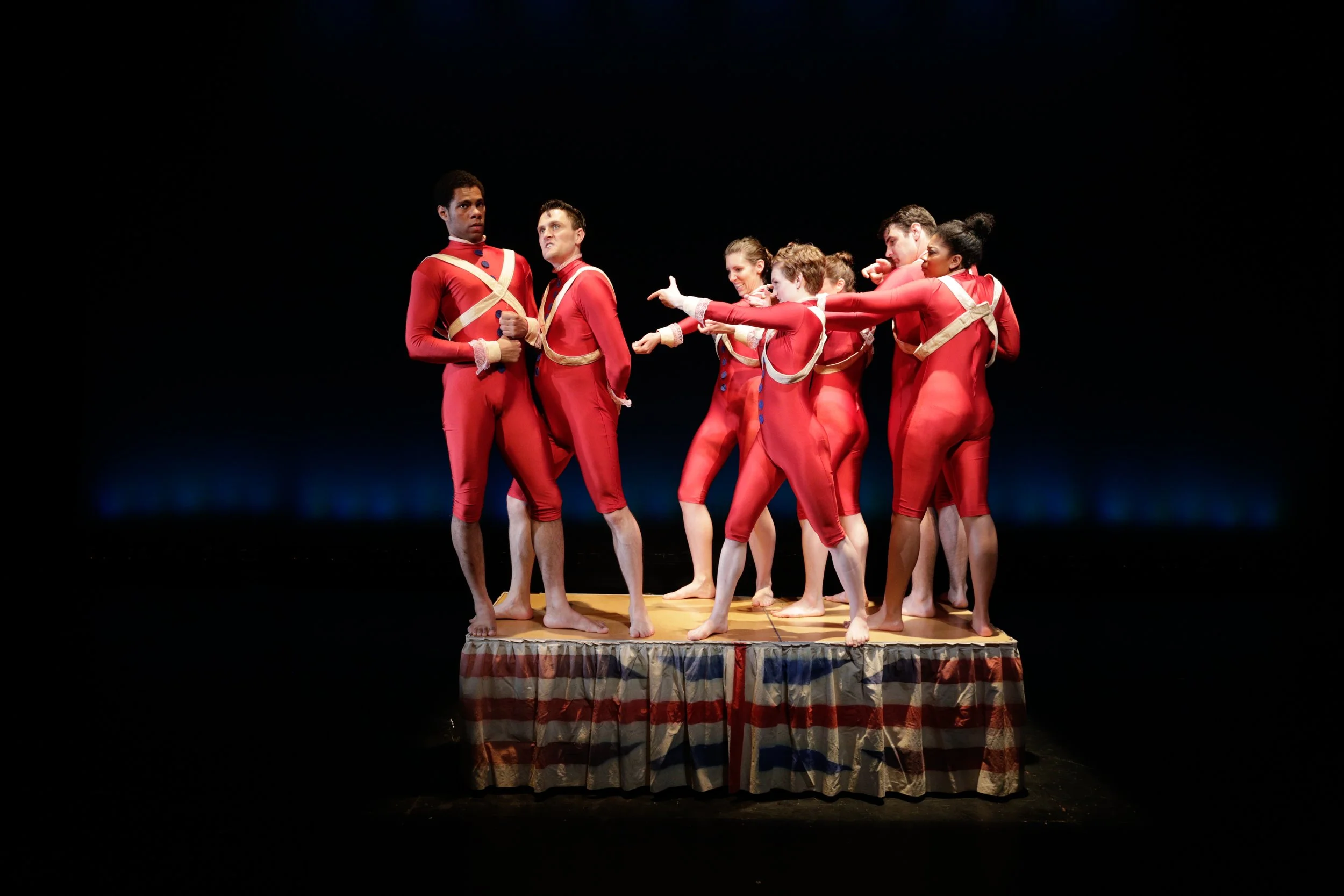
7 actors positioned
2 feet off the ground share
21 square feet of space
Recreate the entire American fight for independence from Lexington to Yorktown using only their bodies, voices and (pantomimed) cannons in
50 minutes
It’s the ultimate American origin story!
Combining tongue-in-cheek humor with a dash of derring-do, The American Revolution displays Theater Unspeakable’s rowdy brand of bare-boned and imaginative physical theater. This show is recommended for ages 9 and up.
Honoring 250 years since the signing of the Declaration of Independence, this show makes one stop at Walton Arts Center on Sunday, May 3 at 4 pm. All tickets are only $10.
We sat down with the show’s director Marc Frost and American Stage Chicago intern Cristabel Donker to learn more.
Why did Theater Unspeakable choose to make this play?
The American Revolution is definitely a big story - with all its important political and historical moments not to mention eight years of battles - but it’s also a story that we don’t hear very much today. Maybe this is because Civil War-era films are popular right now, or maybe its because our nation’s founding story seems too academic, too stale, too far removed from the way we live today. That’s where movement-based narrative, or what may also be called physical theater, can help us make a story fresh and alive for a contemporary audience.
It is important to tell both sides of any story, but when you are trying to condense a big story into a small space (and time!) you have to paint the action with a thicker brush while also maintaining some of the finer details. In this case, I think most U.S. audiences can sympathize with the American side and that is where we have tried to show the most complexity. That George Washington was not born a hero, that John Adams had major ego programs and that the Founding Fathers and Mothers were real people trying to deal with real situations long before they became mythologized into marble portraits.
How did you approach the obvious presence of slavery in this time period without making it central to the story?
We did not want to shy away from the fact that slavery was an everyday fact of life during the American Revolution. Washington, Jefferson and many other famous revolutionaries spoke about “unshackling themselves from the chains of England’s tyranny” while at the same time keeping thousands of enslaved people in their own households.
What message or feeling are you hoping audiences walk away with?
Billy Lee once said of Washington, “When I think about George, I think of our country. Not a perfect one, but a good one.” This is the same message I would like people to take with them when they leave the theater. The country’s founding had an imperfect beginning, build upon the sacrifice, slaughter and subjugation of many individuals and peoples, but I want them to leave feeling proud of their country’s founding, because it truly was the dawning of a new era for personal freedom. Even in its most beautified heroes, we see the flaws, the human shortcomings, which to me, make the achievements all the more inspiring. We also hope they laugh.