By Ruthie Fierberg, Broadway News. Reshared with permission.
The title “Buena Vista Social Club” refers to many entities. It is the name of a Havana night spot, the 1990s Cuban music ensemble (named as an homage to the locale), that band’s eponymous Grammy®-honored album, the documentary about the making of that album and now a Broadway musical. But the “Buena Vista Social Club” moniker is also an evocation of a specific sound: technically masterful, spiritually authentic Cuban music.
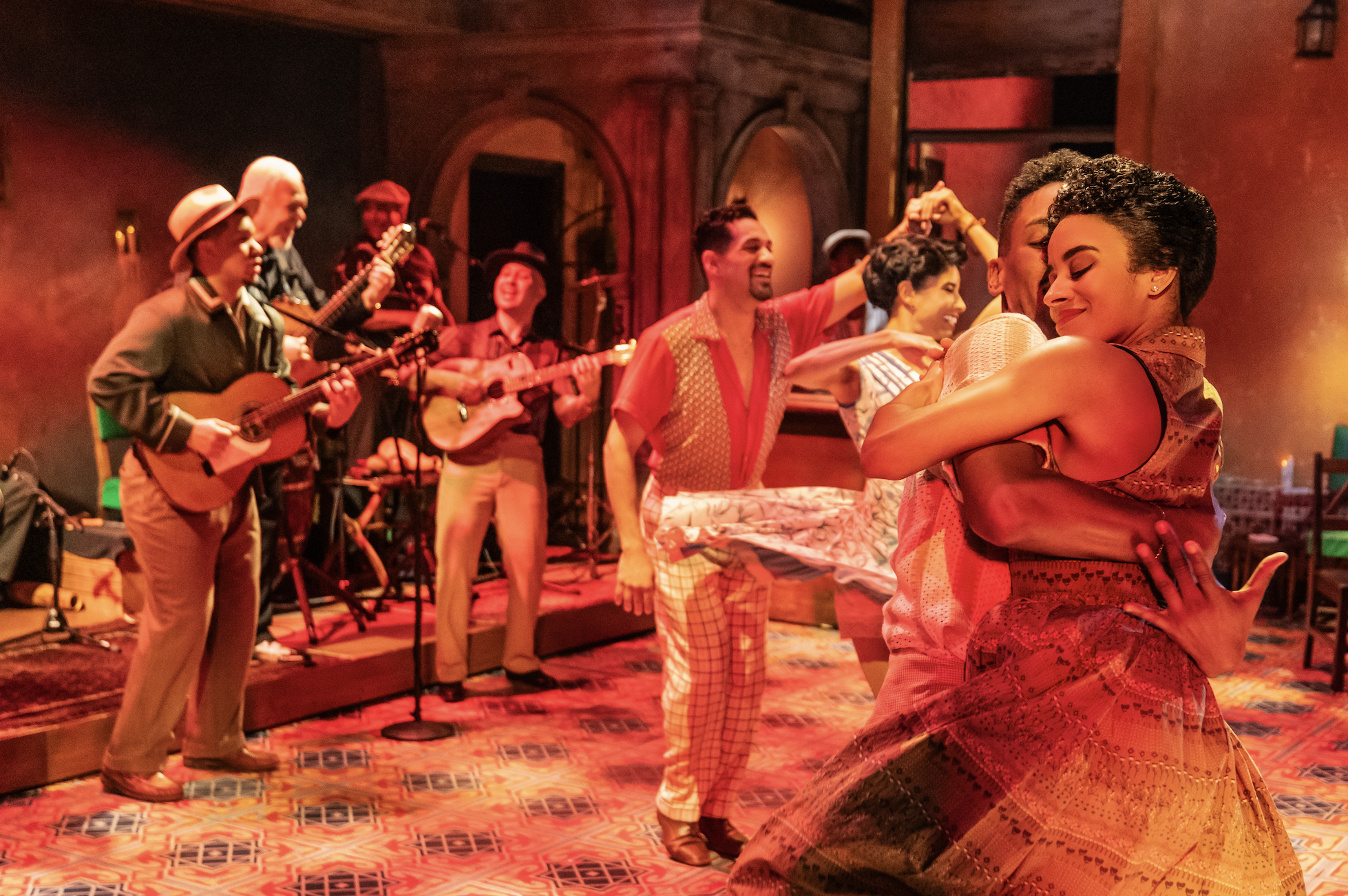
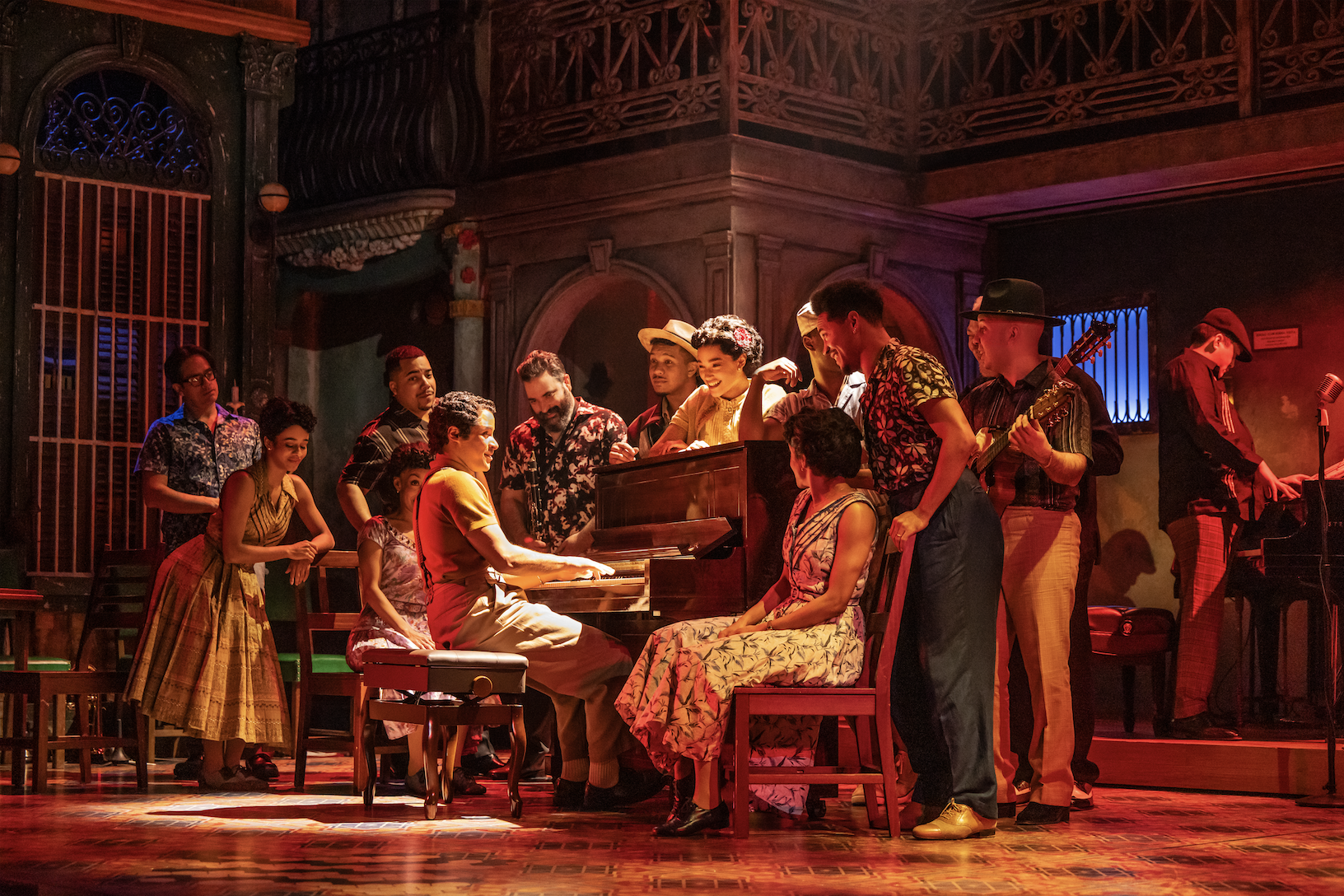
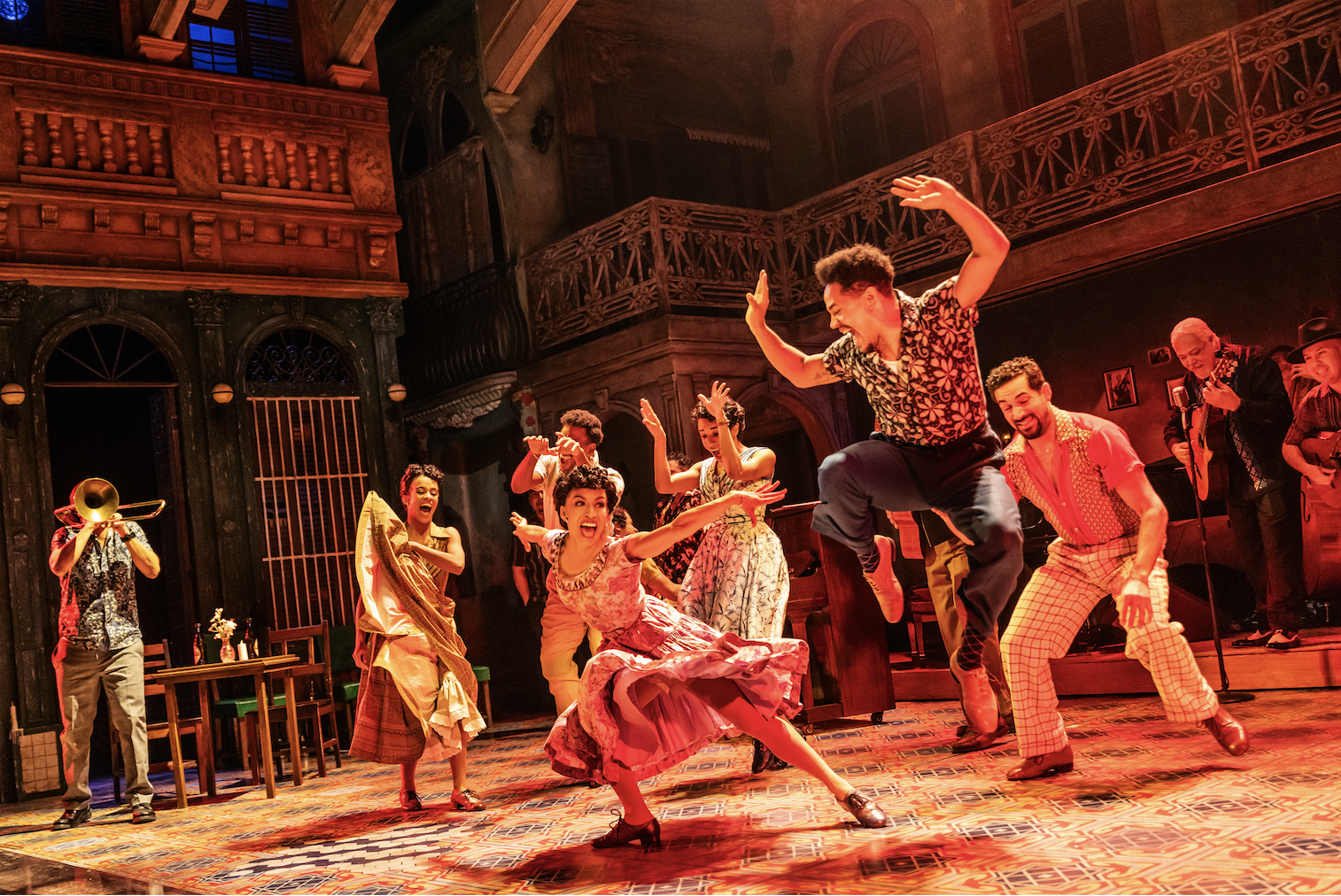
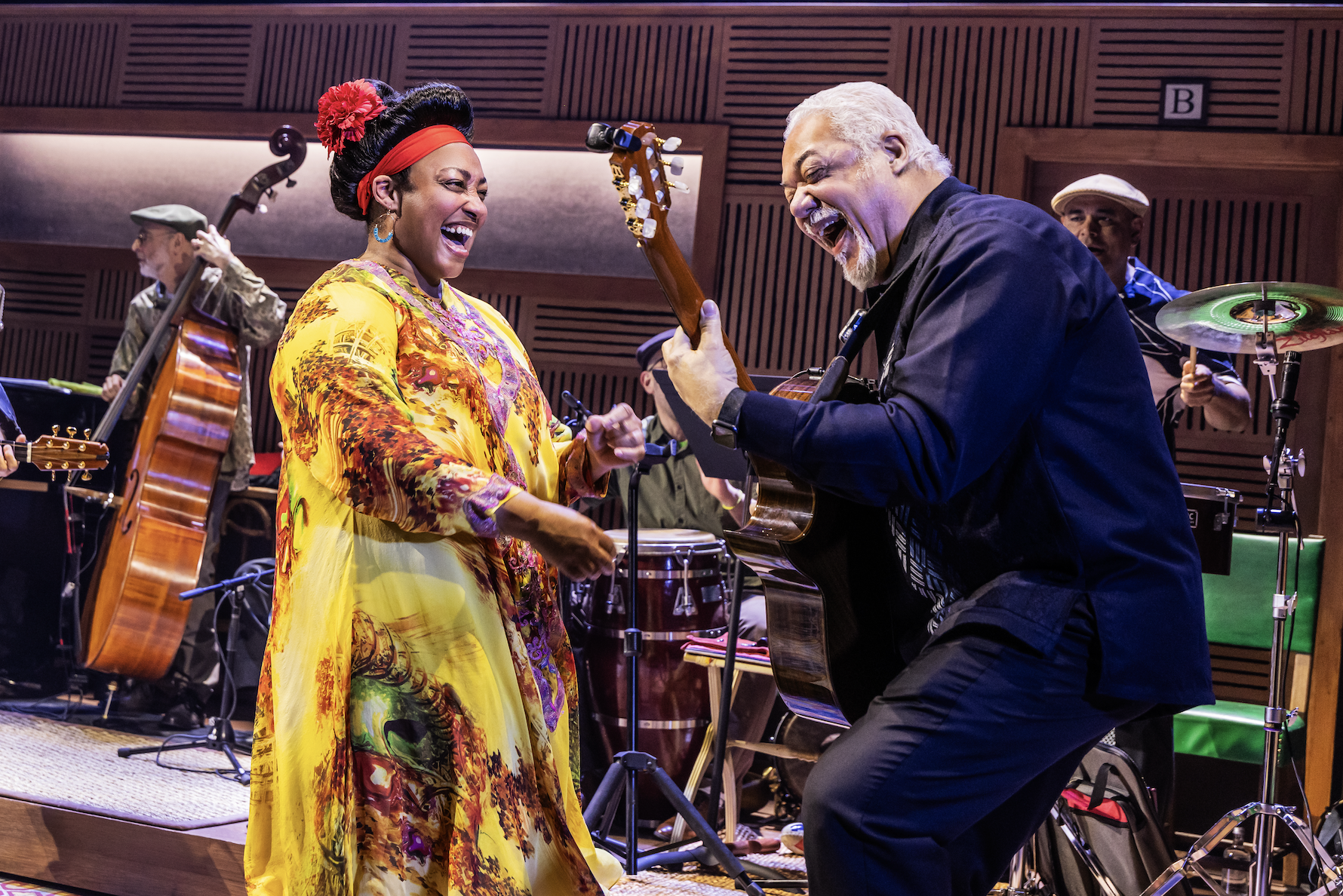
The Broadway company of Buena Vista Social Club. Photos by Matthew Murphy.
Playwright Marco Ramirez said those are the songs of his upbringing. The child and grandchild of Cuban immigrants, Ramirez remembered how his grandfather would play the album Buena Vista Social Club on his boombox. When Ramirez was approached to write the libretto for a musical about the band, “It was the fastest ‘yes’ I ever said,” the writer told Broadway News.
“When my grandfather moved to this country in 1968, he was a busboy at a restaurant two blocks from the theater,” Ramirez said, referring to the Gerald Schoenfeld Theatre where Buena Vista Social Club opened on Broadway. “When I think of the fact that I’m now opening two blocks away with his favorite songs playing, that is pretty moving.”
In crafting the musical’s story, Ramirez was inspired by fact, but he also exercised creative license in order to pay tribute to the ensemble and to Cuban culture, as well as to craft an intriguing, relatable story. Buena Vista Social Club is set in the ’90s and the ’50s. The ’90s storyline is similar to the band’s origin story: In 1996, a group of musicians assembled to record Cuban music. Historically, those musicians were unrelated until that moment. But Ramirez’s book imagines: “What if they had known each other and this was a reunion?” What if they met at the Buena Vista Social Club?
Here, Ramirez breaks down his writing process.
Broadway News: You were asked to come on as the musical’s book writer — but you get to decide what the story is and where it goes. What was your first kernel of an idea?
I want to make sure we honor the music, whatever we do. Sometimes when you transfer something into the musical theater form, the authenticity of it would be flattened. I wanted to make sure that the songs stayed in Spanish. This is, I think, one of the great pieces of art ever made by humankind. I would put it up there with the work of Michelangelo and The Godfather. Even in the history of recorded music, I think it really stands out. So the story of how it got made is always really exciting. This record was made at a very pivotal, interesting, tricky time in Cuban history. How can we make this musical to help [audiences] understand [the record] a little more? So my gut was: How do we make this [musical] about this magical art form? To me, it’s alchemy. The music studio can be the most exciting, vibrant place where stories can happen.
You’re an accomplished playwright. Is this the first book of a musical you’ve written?
This is the first time I ever wrote the book of a musical. It wasn’t a typical book because we knew we wanted to keep the songs in Spanish. So it doesn’t even feel like a jukebox musical, per se, because you [would] use those lyrics to further the story. For me, the job here was to know this music, select songs, put them in an order that felt like they told a story, and then to make the book one that could frame them, so that each of these songs could be then put in context so that a non-Spanish speaker could still enjoy the experience without subtitles. So that’s on top of the challenge of just telling the story with a beginning, middle and end with characters who change and all the other stuff they taught me in drama school.
In ordering the songs to tell a story through the music, you’re not relying on lyrics — though Spanish speakers have a bonus of understanding them. Is the arc you’re creating simply an emotional one?
Right. When we were presenting a song, it would be presenting a new character, a new location, a new conflict, a new theme, a new depth of an argument. A very rural song is how we introduce Compay Segundo — the guy with a guitar, mustache, cigar and the hat. He’s the kind of man you would meet playing at a little, throwaway club. And he would be singing these very rural songs. Knowing the DNA of each of them, I realized we have a barn burner [on the album] so this probably is the opening of act two. I’m a fluent Spanish speaker and it’s my first language, so I [don’t] write off the audience who speaks Spanish — they’re going to see it in “3D.” But my writing principle was: I know what these songs sound like, the audience who even doesn’t speak Spanish might know what they sound like, but my job is to show them what they look like, feel like and where they came from.
Like you said, a story about making the record was your impulse. You could have written a musical that only took place in the studio. And yet, as I know from having seen the 2024 Off-Broadway mounting, your musical traverses many places and multiple eras. How did that evolve?
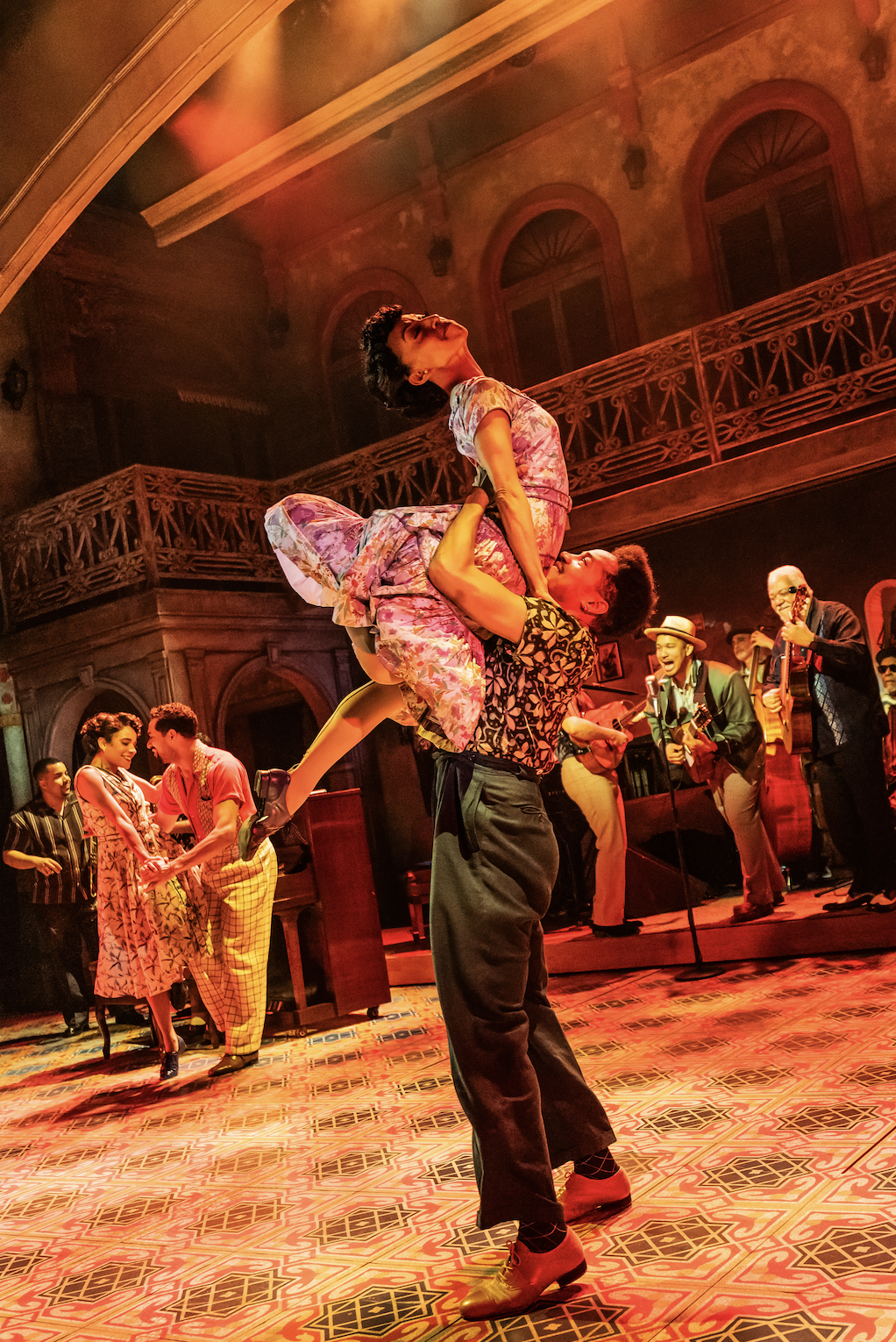
The incorporation of the ’50s story and of dance came at the same time. A lot of these songs are ultimately dance music — that’s obviously not something that happens in a recording studio. What’s beautiful about what choreographers Justin Peck and Patricia Delgado have done is they have brought in not only social dance — in Cuban, Latin American, Caribbean forms — they’ve also brought in a ballet aesthetic, which is also very much part of the Cuban culture. So when we are in the ’50s, we can see what’s happening at the club back in the day, which is a lot of dance. It gives us this fluidity to have this ensemble of dancers help illuminate the songs in the ’90s [timeline].
Who are the characters driving the story?
Even though this is the story of a band [mainly four of its members], as we say at the top of the show, it is framed as a story of Omara Portuondo, who, when we meet her, has not sung in many years for serious reasons. She’s known as the crooner of Havana. She just stopped singing at one point. And so when we meet her, this young producer is coming to her and saying, “Hey, I have an opportunity. I’d love to make one more record.” And much like the gunslinger who has hung up her rifle, she says, “I don’t do that anymore.” But he tempts her with this idea of making beautiful music again, maybe with some people she knows from back in the day. As she starts singing these songs, memories start coming back. And those memories are the story of the younger Omara, an artist who wants to make authentic, heartfelt music while her sister wants to make very commercial music. It’s ultimately the story of two sisters who used to be really close, who decide on parting ways. It’s heartbreaking for both of them because they don’t know what making music is without each other. That’s told parallel to the ’90s story of a woman kind of coming back to make music, but realizing this is kicking up a lot of old stuff, and it’s essentially therapy.
Did the ’50s storylines come out of your interviews with individual band members and the documentary?
That’s the part that’s more imagined. It feels right for the part that’s furthest from present day because that’s how memory works. But in reality, some of these musicians weren’t actually contemporaries: Compay and Omara were about 20 years apart. The idea of making them one generation that came up together and then were split apart, was a way, dramatically, to help cohesively tie the story together. In reality, [pianist] Rubén González did probably play the Buena Vista Social Club. And in reality, [vocalist] Ibrahim [Ferrer] was a background singer for Omara at one point. So there are threads of reality in there. But the creative license we’re taking is this notion that they were this clique of four.
This is all the structure of your book. Tell me about the dialogue and language you’re using.
Almost all the songs are about very big emotions — longing or heartbreak or loss or unrequited love or potential or betrayal. Everything is turned up to 11 in these songs. In order to match that, the story that we’re telling, especially in the ’50s, has to get to that place of betrayals and longing, etc.
As you’ve been saying, these songs have a vastness to them. Did you try to create that same poeticism in your text? Or are you contrasting them with a naturalistic sensibility?
I’m trying to do a little of both. I’m trying to make it character specific. In real life, Compay was a storyteller. He would use metaphors about flowers and life — poetic, soft metaphors in a way that was very florid and gorgeous. Of any of the characters, he’s the one who kind of gets these speeches. But the young producer who comes to make the record, he’s much more sober and pragmatic. The other element that has been a secret ingredient is just humor. For this new production, I realized how powerful humor could be. These songs are about big emotions and heartbreaks and everything, but humor just makes them both [songs and book] feel better. The perfect balance of both is, for me, a very clear representation of Caribbean culture, of heartbreak, but also just the life of any artist anywhere.
Hailed as a “jaw-dropping, soul-stirring must see” (The Washington Post), the Tony® and Grammy® award-winning Buena Vista Social Club™ is a journey through music and memory into the beating heart of Havana. A world-class company brings the story of the iconic album to thrilling life in this tale of big dreams, second changes and music that needs no translation.
Show dates and times
Tuesday, Dec. 15 at 7 pm
Wednesday, Dec. 16 at 7 pm
Thursday, Dec. 17 at 1:30 and 7 pm
Friday, Dec. 18 at 7:30 pm
Saturday, Dec. 19 at 2 & 7:30pm
Sunday, Dec. 20 at 2 pm